When comparing fuel cards, two of the most popular choices for truckers are the TCS Fuel Card and the WEX Fleet Card (which now includes T-Chek/EFS). The TCS Fuel Card is known for its no transaction fees at an extensive in-network fueling system, while the WEX Fleet Card provides nationwide acceptance with strong reporting and fleet management tools. Both cards offer financial savings along with features like purchase controls, real-time expense tracking, and fraud protection. As you weigh your options, it’s essential to look closely at factors such as transaction fees, discount programs, security safeguards, and overall network coverage to choose the card that best supports your trucking operation.
Key Takeaways
- Evaluate the discount programs; options like TCS Fuel Card provide per-gallon savings with extensive network access, enhancing cash flow management.
- Consider transaction fees; some cards impose charges for out-of-network purchases, which can offset discounts earned at specific stations.
- Look for customizable purchase limits and credit controls to manage spending and prevent unauthorized transactions effectively.
- Check for security features like PIN protection and fraud alerts to safeguard against unauthorized use and enhance overall financial oversight.
- Assess cash back programs versus discount options; choose a card that aligns best with your fuel purchasing patterns and operational needs.
Introduction to Fuel Cards for Truckers
Fuel management is essential for truckers, impacting both operational efficiency and overall costs.
By using fuel cards, you can streamline your purchasing process while benefiting from discounts and extended payment terms.
Understanding the various options available can help you choose the right fuel card that fits your specific trucking needs.
Importance of Fuel Management in Trucking
Managing fuel costs is essential for trucking companies, as they often account for a significant portion of overall operating expenses. Implementing effective fuel management through fuel cards can greatly enhance your operations.
These cards provide access to discounted fuel prices, helping you adopt fuel efficiency strategies and apply cost reduction techniques. Additionally, they simplify expense tracking and integrate with your accounting systems, which streamlines financial oversight and enhances cash flow management.
How Fuel Cards Work
Fuel cards function similarly to credit cards, allowing you to purchase fuel and approved items without upfront payment.
You’ll typically have billing cycles of 60 to 90 days, enabling you to manage cash flow effectively.
Understanding the transaction processes and how these billing cycles work can help you maximize your savings and streamline your expenses.
Transaction Processes and Billing Cycles
When you use a fuel card, you can enjoy the convenience of purchasing fuel while benefiting from an extended payment period of 60 to 90 days, which can greatly ease cash flow challenges in your trucking operations. These cards typically require driver PINs for security, helping maintain transaction limits and authorized use. Most fuel cards also offer automatic purchase tracking, simplifying your bookkeeping and IFTA reporting.
| Feature | Description |
|---|---|
| Transaction Limits | Defined by card issuer |
| Payment Options | ACH transfers, credit, or dedicated funding |
| Purchase Tracking | Automatic logs of transactions |
| Billing Cycle | Aligns with issuing company’s schedule |
| Fees | Possible for out-of-network transactions |
Understanding these processes can help you choose the best fuel card for your needs.
Key Features to Consider When Choosing a Fuel Card

When choosing a fuel card, you’ll want to contemplate credit controls and spending limits carefully.
These features help you manage expenses and prevent unauthorized transactions, giving you peace of mind on the road.
Credit Controls and Spending Limits
Selecting a fuel card that aligns with your operational needs involves careful consideration of credit controls and spending limits. Many fuel cards offer customizable purchase limits, which help you manage budget effectively and prevent unauthorized spending.
This flexibility allows you to adjust spending strategies according to fluctuating fuel prices or changing operational requirements. Additionally, PIN protection enhances fraud prevention by guaranteeing that only authorized drivers can make purchases.
Real-time transaction monitoring keeps you informed about spending patterns, while alerts for suspicious activities provide an extra layer of oversight. By prioritizing these features, you can maintain tighter control over your fuel expenses and guarantee that your fleet operates within its budget constraints.
Top Fuel Card Providers for Truckers
When considering top fuel card providers, Diesel Quest and T-Chek stand out for their unique offerings tailored to truckers.
Diesel Quest focuses on providing extensive fuel management solutions, while T-Chek emphasizes accurate fuel reporting and tracking capabilities.
Understanding these options can help you make a more informed decision that suits your trucking needs.
Overview of Diesel Quest and T-Chek
Two prominent fuel card providers, Diesel Quest and T-Chek, cater specifically to the needs of truckers, offering essential features that enhance fuel management and operational efficiency.
- WEX Fleet Card benefits include real-time tracking of fuel purchases, nationwide acceptance at over 12,000 fueling locations, and per-gallon discounts that can meaningfully reduce costs.
- T-Chek features a thorough fuel card program with automated IFTA reporting and detailed transaction analytics, integrating seamlessly with various fleet management systems.
Both cards simplify accounting through digital receipt tracking and expense management tools.
When comparing fuel savings, Diesel Quest and T-Chek offer competitive pricing structures, helping you reduce overall fuel expenses effectively.
Fuel Card Pricing and Fees Explained
When evaluating fuel cards, it’s essential to understand the difference between monthly fees and transaction fees.
Monthly fees can add up, usually averaging around $10 per vehicle, while transaction fees may hit harder if you fuel at out-of-network stations.
Monthly Fees vs. Transaction Fees
While evaluating fuel cards, it’s essential to take into account both monthly fees and transaction fees, as these costs can greatly influence your overall fuel expenses.
A monthly cost analysis reveals that fees typically hover around $10 per month per vehicle, which can add up quickly for larger fleets. In contrast, transaction fees may arise at out-of-network locations, often as administrative charges per gallon, potentially negating any discounts you’ve earned.
Conducting a thorough transaction fee comparison is vital to avoid unexpected costs. Some cards, like the TCS Fuel Card, have no transaction fees at a vast network of stops, making them a smart choice for implementing operational savings strategies that enhance your bottom line.
Network Coverage and Acceptance
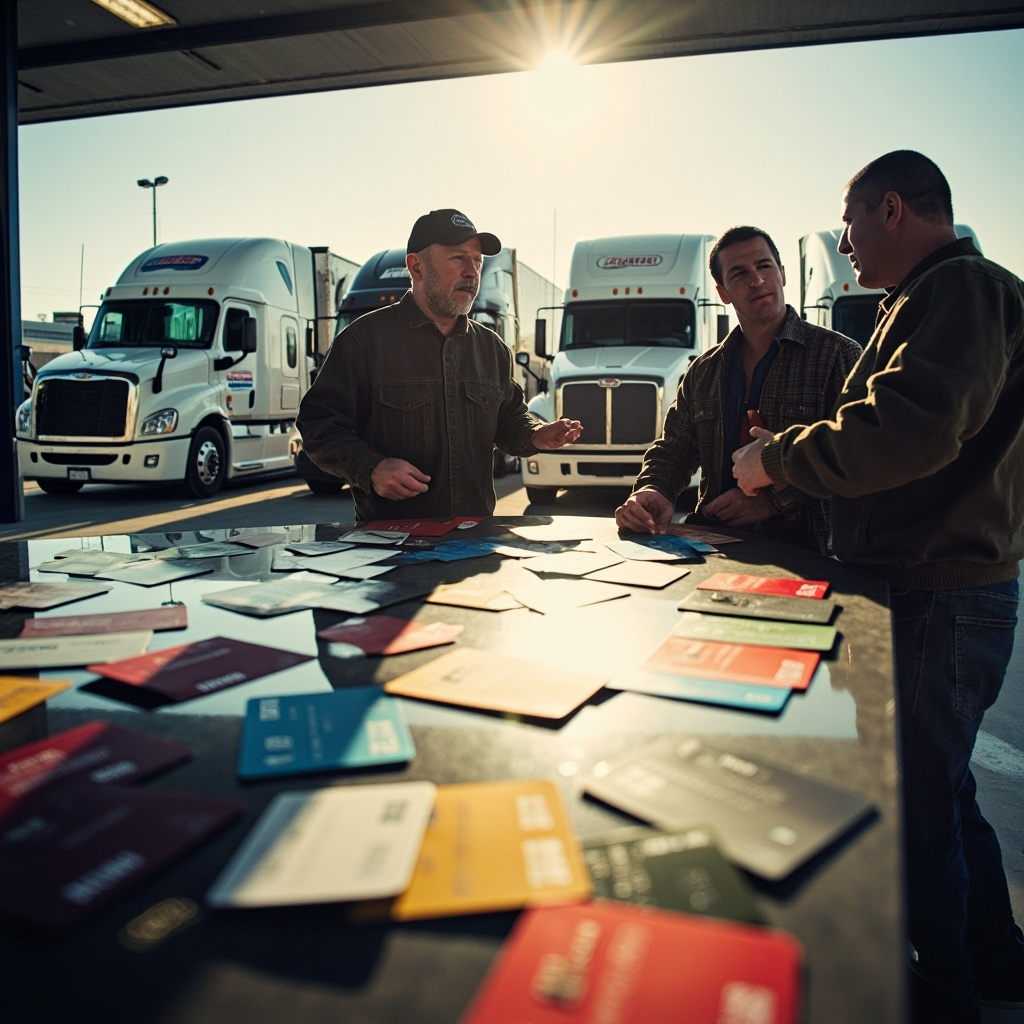
When choosing a fuel card, you’ll want to evaluate the network coverage to guarantee it meets your fueling needs.
Some cards, like the TCS Fuel Card, are accepted at over 8,000 truck stops, while others, like WEX Fleet Cards, offer access to more than 12,000 locations nationwide.
Understanding the size of the station network can help you maximize savings and enhance your overall fueling experience.
Evaluating Station Network Size
Evaluating the station network size of fuel cards is crucial for truckers looking to maximize convenience and savings. A card with extensive geographic coverage can greatly enhance your fueling experience.
Consider these factors when reviewing network limitations:
- Acceptance Rates: Look for cards accepted at a large number of stations, like the WEX Fleet Card, which boasts over 12,000 locations nationwide.
- In-Network Discounts: Cards like the TCS Fuel Card often provide better savings at their in-network stops, reaching up to $0.40 per gallon.
- Route Compatibility: Confirm the card’s network aligns with your preferred routes to avoid unexpected fuel expenses.
Understanding these aspects helps you choose a fuel card that aligns with your trucking needs and maximizes savings.
Benefits and Rewards Programs
When choosing a fuel card, you’ll need to evaluate whether you prefer cash back or discount programs.
Cash back options give you a percentage of your spending returned to you, while discount programs typically offer reduced rates on fuel purchases.
Understanding these differences can help you select a card that best suits your driving habits and financial goals.
Cash Back vs. Discount Programs
How do cash back programs stack up against discount programs for truckers? Both offer unique benefits, but they cater to different needs. Here’s a quick comparison:
- Cash Back Advantages: You receive a percentage back on fuel purchases, providing flexibility that can help manage overall expenses.
- Discount Program Drawbacks: While some programs, like the TCS Fuel Card, offer significant per-gallon savings, they may not provide immediate cash benefits.
- Loyalty Program Benefits: Both types often include additional perks, like discounts on maintenance, enhancing their overall value.
Ultimately, your choice depends on your fueling habits and financial management preferences. Consider how each program aligns with your trucking operations for the best results.
Security and Fraud Protection
When choosing a fuel card, it’s essential to take into account the security features it offers.
Many cards include PINs and fraud alerts to protect against unauthorized transactions, helping you maintain control over your expenses.
Additionally, chargeback options can provide further reassurance, allowing you to dispute any potentially fraudulent charges effectively.
PINs, Fraud Alerts, and Chargebacks
While managing fuel expenses, security becomes a crucial concern for truckers and fleet managers alike. To safeguard your transactions, consider these key features:
- PIN security measures prevent unauthorized usage by guaranteeing only approved drivers can access funds.
- Fraud detection strategies, like real-time alerts, notify you immediately of any suspicious activity, allowing for quick responses.
- Chargeback processes enable you to dispute unauthorized charges, offering protection against potential fraud.
These tools not only help monitor spending patterns but also set purchase limits and location restrictions to further enhance security.
Security and Fraud Protection
When choosing a fuel card, it’s essential to take into account the security features it offers.
Many cards include PINs and fraud alerts to protect against unauthorized transactions, helping you maintain control over your expenses.
Additionally, chargeback options can provide further reassurance, allowing you to dispute any potentially fraudulent charges effectively.
How to Apply and Eligibility Requirements
When you’re ready to apply for a fuel card, you’ll need to gather specific documentation, including your business details and, in some cases, proof of trucking operations.
Most providers will also conduct a credit check to assess your creditworthiness, which can impact your eligibility.
Understanding these requirements can streamline your application process and help you choose the right card for your needs.
Required Documentation and Credit Checks
Applying for a fuel card involves gathering essential documentation and understanding eligibility requirements tailored to your specific situation. Here’s what you’ll typically need:
- Documentation Types: You’ll need a valid driver’s license, proof of business ownership, and your federal Employer Identification Number (EIN).
- Application Processes: Many providers offer quick online applications with clear, step-by-step instructions. This simplifies the process considerably.
- Credit Alternatives: Some cards, like the Mudflap App, don’t require credit checks, allowing broader access for truckers.
Keep in mind that eligibility may vary by provider, with some targeting owner-operators and others focusing on larger fleets. This may necessitate additional documentation or financial statements.
Always review the specific requirements before applying.
Common FAQs About Fuel Cards
When you’re considering a fuel card, it’s essential to understand the fees and usage restrictions that come with each option.
Many cards have specific networks where you can maximize your savings, and fees can vary widely depending on your choice.
Let’s explore some common questions to help you make an informed decision.
Frequently Asked Questions on Fees and Usage
How can you make the most of your fuel card while keeping an eye on costs? Understanding fees and usage is essential to maximizing fuel card benefits. Here are three key points to take into account:
- Know the Fees: Be aware of account setup, transaction, and late fees, which can add up quickly. Look for cards with minimal fees to enhance savings.
- **Utilize *Expense Tracking Tools***: Many fuel cards offer detailed *transaction reports*. Use these to identify spending patterns and optimize your fuel efficiency strategies.
- **Monitor *Security Features***: Protect your card with driver PINs and location restrictions to prevent unauthorized usage and manage expenditures effectively.
Final Thoughts
In conclusion, selecting the right fuel card for truckers boils down to understanding your unique needs. By prioritizing factors like fees, features, and fraud safeguards, you can find a card that not only maximizes savings but also streamlines spending. Remember, a well-chosen fuel card can greatly enhance your operational efficiency. Take the time to compare options, ensuring you make an informed decision that fuels your success on the road.